


Overview
Metro is actively monitoring water use and finding new ways to increase conservation efforts. As a responsible steward of water resources, Metro continues to develop additional water use reduction strategies focused on technical improvements and behavioral change at Metro, while developing partnerships with key regional stakeholders to build a more resilient Los Angeles (LA) County.
While water conservation and efficiency remain priorities for Metro, water reclamation, reuse and sustainable stormwater management will be equally critical components of Metro's water strategy through 2030. Our targets and commitments related to water reflect the full water cycle, recognizing that the ways in which Metro procures, consumes, processes and disposes of water have regional impacts that can affect both the supply and quality of our regional water resources.
Program Highlights
Protecting Regional Water Quality During Construction
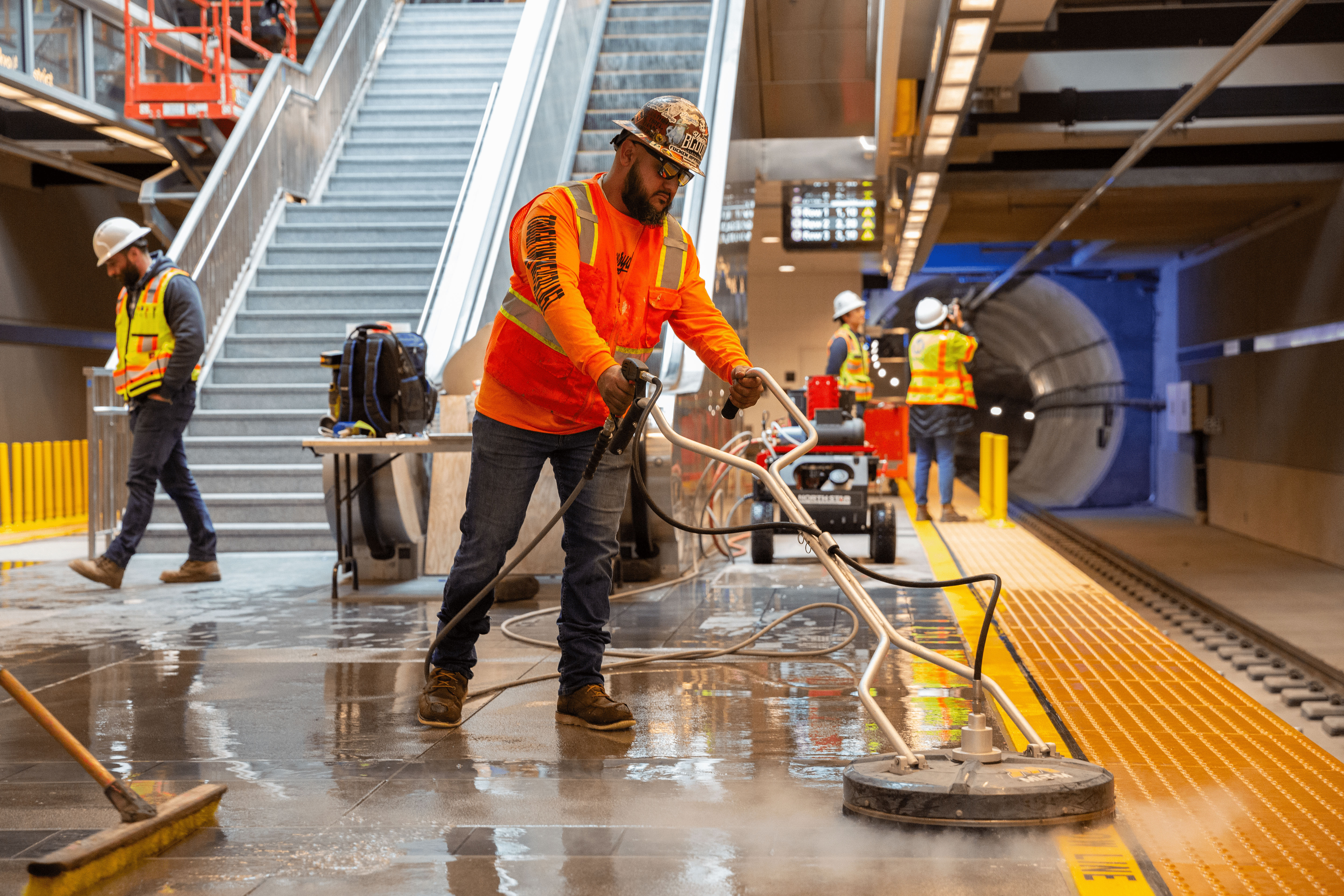 The Metro D Line and LAX/Metro Transit Center Station Projects are protecting regional
water resources during construction.
The Metro D Line and LAX/Metro Transit Center Station Projects are protecting regional
water resources during construction.
Metro's commitment to conserving water and protecting water quality extends beyond day-to-day operations and is a focal point during construction. In 2022, several active construction projects, including the LAX/Metro Transit Center Station and the Metro D Line Extension Project, implemented advanced water quality measures to protect LA's local water resources.
Dewatering is a common practice where groundwater is extracted to facilitate construction in areas below the water table, such as underground transit stations. Excessive dewatering can have negative consequences, such as lowering the groundwater table, causing land subsidence and potentially leading to environmental disruptions. Wherever dewatering cannot be avoided, Metro's projects have installed infrastructure to treat and capture water for reuse or recycling, either by the project or by outside entities during construction.
For example, the D Line Extension Project installed on-site water treatment plants at three stations to treat contaminated groundwater. Treated water was utilized for onsite dust control and made accessible to other Metro projects and public agencies for use across the region. Practices such as these encourage the use of recycled water for non-potable purposes, such as dust control during construction activities. By carefully managing dewatering activities, reducing project water demand and promoting the reuse and recycling of groundwater, Metro aims to protect the natural hydrological balance in the region and prevent potential harm to the environment and local ecosystems.
2030 Targets
Understanding this Target
This target measures Metro's contributions to LA's regional water supply and water quality by building infrastructure to capture and infiltrate stormwater runoff. As Metro's system grows in coming years, the agency is actively evaluating opportunities to install bioswales, permeable pavement and other nature-based solutions to reduce stormwater runoff and increase infiltration capacity along rail alignments and highways, and near current and forthcoming facilities. These systems produce long-term water supply benefits by safely infiltrating stormwater into the soil and replenishing groundwater sources and local aquifers. They also provide water quality improvements through filtration features that capture and prevent pollutants from entering land and water ecosystems and harming wildlife. Systemwide, these projects have the potential to make Metro net water positive, meaning that we contribute more water to groundwater recharge efforts than we use to support our operations annually. As a new target, Metro's capacity to capture and infiltrate stormwater is being measured against a 2022 baseline.1
Target Performance
In 2020, Metro initiated a survey of its existing stormwater capture and infiltration infrastructure to quantify and establish a baseline for annual infiltration capacity. The baselining study, which was completed in 2021, enabled the first round of reporting on this target during the 2022 reporting cycle and will serve as a benchmark for measuring performance in future years.
Based on the results of the modeling, the 2022 baseline for water infiltration and capture capacity was 36 acre-feet per year. One acre foot is the standard unit for measuring stormwater infiltration and equates to the volume of water required to cover one acre of land (roughly the size of a football field) with one foot of water. With a goal to increase capacity by 15% from the baseline, Metro aims to achieve a capture capacity of 41.4 acre-feet per year by 2030. This type of green infrastructure is a standard part of all Metro projects, so much so that Metro's current portfolio of planned water capture projects is projected to infiltrate up to 974 acre-feet per year by 2030, representing a 2,500% increase in infiltration capacity over the baseline volume. A significant majority (91%) of the planned water infiltration and capture volume is from projects along the G Line.