


Overview
Metro relies on energy to operate our system - it powers our operational facilities, fuels our vehicles and runs our rail systems. The use and sourcing of that energy has ongoing impacts and longstanding implications for the environmental, fiscal and infrastructural resilience of our system. Metro's building energy consumption alone accounts for just over 100 gigawatt-hours (GWh) of electricity consumption per year across our extensive inventory of facilities in LA County. These building operations are critical to support over 1.2 million weekday rail and bus transit patrons. As such, Metro is taking proactive measures to implement innovative energy conservation practices and technologies in buildings, while procuring and generating more clean, renewable sources of energy wherever possible.
Program Highlights
Metro's Energy Efficiency Long-Term Plan
 The Energy Efficiency Long-Term Plan (EELTP) identifies opportunities for upgrading and
replacing building systems at Metro facilities over the next 10 years.
The Energy Efficiency Long-Term Plan (EELTP) identifies opportunities for upgrading and
replacing building systems at Metro facilities over the next 10 years.
Implementing strategies to reduce energy consumption through conservation and efficiency is one of the most cost-effective steps Metro can take to reduce its operational greenhouse gas (GHG) emissions. Metro's Energy Efficiency Long-Term Plan (EELTP), finalized in 2022, provides an important roadmap for energy efficiency by identifying opportunities for upgrading and replacing building systems and controls at Metro facilities over the next 10 years, in alignment with Metro's Climate Action and Adaptation Plan (CAAP).
Based on agency-wide assessment, the EELTP documents the conditions of Metro's existing building systems and identifies efficiency measures, such as installing LED light fixtures, replacing existing appliances with more efficient electric appliances, replacing HVAC systems with electric systems and installing enhanced system controls. The plan also defines project prioritization and planning requirements, such as ensuring equitable implementation at facilities in disadvantaged communities (DACs) and utilizing diverse suppliers and contractors.
Implementation of the EELTP recommendations is estimated to save Metro $3.3 million in annual operating costs and reduce energy consumption at identified sites by 20%. Metro will work closely with the operations team and state of good repair program to prioritize and plan implementation of this strategic blueprint, supporting our sustainability goals of reducing energy consumption, operating costs and GHGs over the next decade.

2030 Targets
Understanding this Target
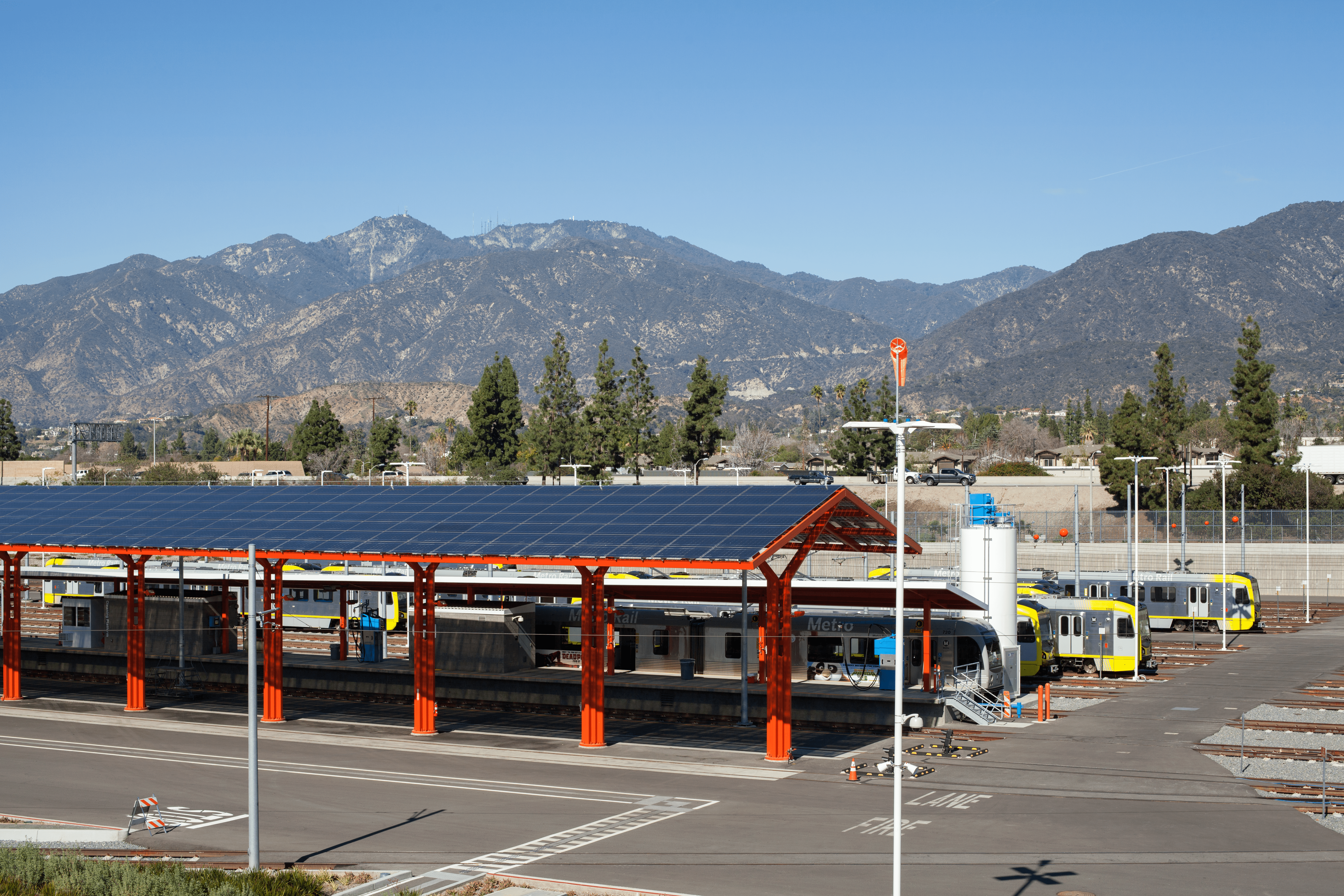
This target measures Metro's capacity to generate clean, renewable energy through onsite energy generation assets. Onsite renewable energy, such as solar photovoltaic (PV) technology, is a critical strategy contributing to both our climate and energy resiliency goals. As of 2020, Metro owned and operated 2.6 megawatts (MW) of solar PV across eight facilities. However, we are working aggressively to increase renewable energy generation capacity through installations at multiple operating divisions, the newly constructed Location 64 and the Airport Metro Connector by 2023. Together, these projects will help us achieve our 2030 goal of 7.5 MW of renewable energy capacity - tripling 2020 capacity levels. As a new target, Metro's renewable energy capacity will be measured against this 2020 baseline.
Target Performance
Metro's onsite renewable energy generation capacity has remained constant at 2.6 MW from 2019 through 2022. Although the size and capacity of the system remained unaltered, actual energy generation of the system increased by 48.6% in 2022 compared to 2021. This significant improvement in generation performance is the result of Metro's comprehensive solar PV operations and maintenance program, which oversaw systemic repairs of the solar arrays at Divisions 8, 24 and 30. Ongoing maintenance and repairs will ensure the arrays continue to produce at peak performance.
Additionally, Metro is in the final stages of commissioning and connecting a new solar array at the Metro Location 64 Maintenance of Way building. When it starts production (anticipated 2024), it will add 0.3175 MW to Metro's solar generation capacity, increasing the total generation capacity across the system to 2.9175 MW.