


Overview
The solid waste category addresses Metro's generation and diversion of solid waste for both daily operations and capital construction projects. To reduce the impact of our waste, we aim to decrease the amount of waste we generate and divert waste from landfills. In alignment with the City of Los Angeles (LA) and LA County Integrated Waste Management Hierarchy, waste reduction and sustainable procurement are the most important first steps toward meeting our 2030 targets.
Building on waste characterization studies and our growing Sustainable Acquisition Program, we are changing existing behavioral and purchasing practices to minimize the upstream and downstream impacts of procured material. We are also partnering internally and regionally to identify creative material reuse and diversion strategies. To address construction waste, we are partnering with Metro's contractors to develop waste management strategies that focus on material reuse and landfill diversion.
Program Highlights
Reusing Construction Clean Soil
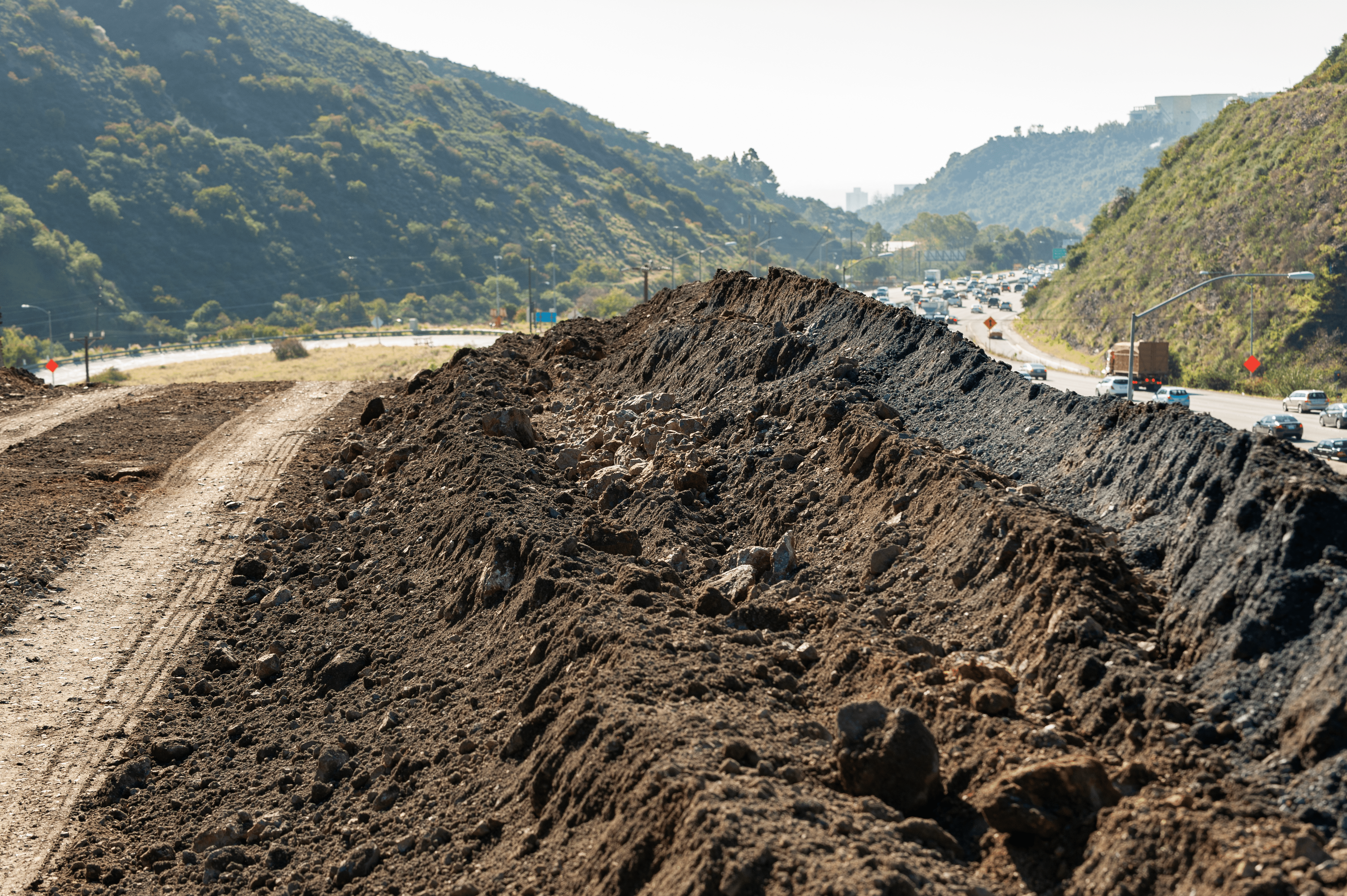 Metro finds creative ways to reuse or recycle the clean soil excavated from construction
sites, preventing it from being sent to landfill.
Metro finds creative ways to reuse or recycle the clean soil excavated from construction
sites, preventing it from being sent to landfill.
Metro's capital rail construction projects will provide increased rail service and important connectivity improvements for the Los Angeles region, but they have the potential to generate a lot of waste in the process. The excavation of clean soil is one significant source of construction waste, particularly for Metro's new underground rail projects, such as the D Line Extension. Metro's adoption of sustainable construction waste management methods as part of each project's Sustainability Plan enables clean, usable soil to be reused between projects, reducing waste and the need to purchase and import new clean soil. These efforts achieved 100% reuse of clean soil in several ongoing projects in 2022, including:
- Metro's D Line (Purple) Extension Transit Project aims to expand the rail system, adding seven new stations and establishing a reliable, high-speed connection between downtown LA and the Westside. Section 1 of the project, including Wilshire/La Brea, Wilshire/Fairfax and Wilshire/La Cienega Stations, reused 100% of its clean soil and land clearing debris, both onsite and offsite in 2022. When onsite reuse was not practical, offsite Metro construction projects or offsite third-party users received soils for reuse.
- Metro's Airport Metro Connector (AMC) project plays a pivotal role in Metro's plan to provide efficient transit connections to Los Angeles International Airport (LAX). The AMC project includes a light rail station, bus plaza, bicycle parking, customer service center and a direct connection to the future LAX Automated People Mover (APM). In 2022, AMC reused 100% of clean soil and land-clearing debris.
2030 Targets
Understanding this Target
This target measures Metro's diversion of daily operational waste from landfill on an annual basis. The diversion rate compares the total amount of operational solid waste generated (including prevented waste) each year with the amount of waste that was diverted from landfill through prevention, reuse, recycling and organic waste recycling. As a result, strides made toward reducing our disposal rate in Target 1 will also benefit our diversion rate.
Disposed waste includes all materials that are sent to landfill and are not repurposed. Recycled waste includes all materials and commodity items that are captured and diverted from landfills to be converted into new materials. Organic recycled waste includes plant and animal derived material that are composted or converted to biomass for other uses (e.g., mulch). Prevented waste includes materials that are reused, as well as materials that are otherwise not acquired and disposed due to actions taken during procurement and within operations.
Target Performance
Diversion from landfill decreased slightly, from 45.7% in 2021 to 43.6% in 2022, meaning that a larger proportion of Metro's waste was sent to landfills compared to last year. This small decline in the diversion rate can be attributed to slight increases in disposed waste resulting from groundskeeping activities along rights-of-way, combined with decreases in volumes of prevented waste from programs, such as Metro's used office furniture auctions, which diverted less furniture this year than in previous years. While Metro's institutionalized waste prevention and diversion programs have been effective in achieving and maintaining a diversion rate in the mid 40% range for the last several years, creative waste diversion and new waste prevention and material reuse strategies, formalized through our growing Sustainable Acquisition Program, will allow Metro to achieve our 2030 diversion target.
Understanding this Target
This target measures the aggregated landfill diversion rate of construction and demolition (C&D) debris generated by Metro's capital construction projects in a year. The diversion rate compares the total amount of C&D waste generated across all projects for which data is available with the amount of C&D waste that was diverted from landfill through prevention, reuse, recycling and organic waste recycling.
C&D waste is defined to include nonhazardous waste materials, such as concrete, metal and wood waste - hazardous waste, excavated soil and land clearing debris are excluded. C&D waste materials generally have the greatest potential to be diverted from landfills. The California Green Building Standards Code (CALGreen) currently requires a minimum 65% diversion rate for construction and demolition materials, yet we are committed to diverting at least 85% of our construction waste on an annual basis.
Target Performance
Unlike Metro's operational waste streams, construction waste is highly variable and affected by the number and types of active projects, current phase of construction and the types of waste materials generated. In 2022, several major projects were in their final stage of construction and produced significantly less concrete and metal waste. As these items are some of the heaviest and most easily recycled of C&D waste materials, Metro's diversion rate for C&D waste declined to 67.7% in 2022. Metro's 2021-2022 C&D waste diversion is also unique from prior years in that it only reflects two active projects rather than the eight projects reported on in 2019 and 2020 due to challenges with data completeness and accuracy. To address these challenges, Metro is improving the tracking and monitoring systems for construction waste to confirm the end use for diverted materials. Additionally, Metro will continue working with our contractor partners to identify opportunities to reuse materials - either onsite or across projects - before sending them to a facility for processing.