


Overview
Metro is investing in the future of the Los Angeles region, starting with our greatest asset - people. Recognizing that 46% of Metro's workforce will be eligible for retirement over the next five years, we must expand our highly skilled and diverse workforce to meet the expected demand for staff. We are creating clear pathways for existing employees to advance their careers while also expanding recruitment efforts and creating proactive pipelines and equitable access to opportunity for the next generation of employees.
Simultaneously, our investments in new infrastructure and our existing transportation system can generate high-quality employment, new career pathways and business opportunities for residents and businesses. Measure M is projected to generate more than 778,000 new job opportunities in the transportation industry over the next 40 years. To connect businesses with these opportunities, Metro's Diversity & Economic Opportunity Department is focused on supporting small, disadvantaged and veteran-owned business enterprises, and has established triennial goals regarding the percentage of contracts awarded to each group.
Program Highlights
Room to Work: Supportive Employment Opportunities
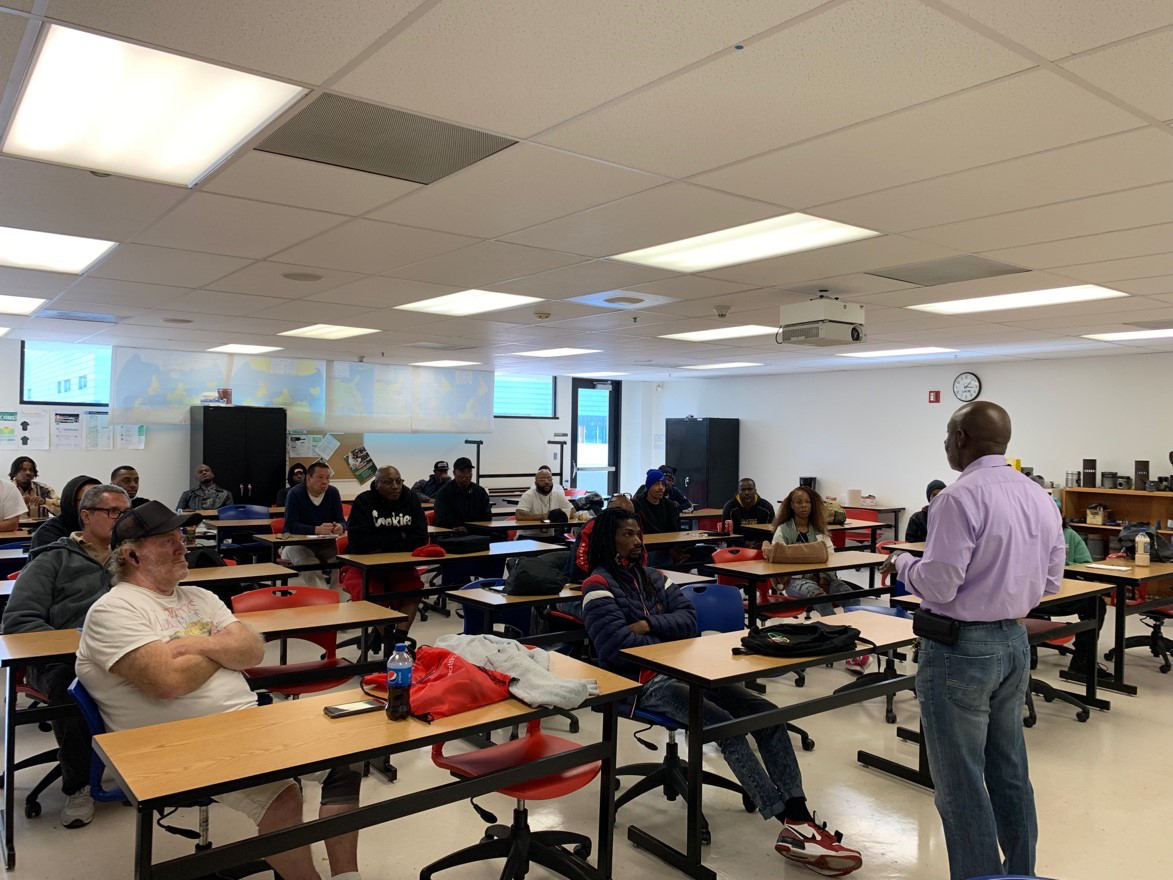 The Room to Work program offers workforce development trainings to build necessary
skills and knowledge to support sustainable employment in the transportation industry.
The Room to Work program offers workforce development trainings to build necessary
skills and knowledge to support sustainable employment in the transportation industry.
The Room to Work program is a targeted Metro initiative that aims to address the needs of unhoused individuals, housing insecure persons, homeless veterans, justice-impacted individuals and those who rely on the transit system as a makeshift shelter. Developed in partnership with local Community-Based Organizations (CBOs), the program is designed to provide employment opportunities and support services to these vulnerable populations. Participants who successfully complete the program requirements are placed in a qualified candidate pool (QCP), granting them priority consideration for entry-level, part-time job openings within Metro. Participants continue to receive housing and case management services throughout the duration of their participation and become eligible to compete for a full-time position after one year of service.
The Room to Work program recognizes the importance of holistic support for its participants. It aims to provide comprehensive services in key areas, such as life skills development, skillset enhancements and educational attainment. All participants will undergo a training course titled "Transportation Workforce Job Readiness Training" to equip them with the necessary skills and knowledge to secure sustainable employment in the transportation industry.
By addressing the unique challenges faced by homeless and justice-impacted individuals, Room to Work demonstrates Metro's commitment to social responsibility and community empowerment. The program not only offers employment opportunities, but also provides the necessary support and resources to help participants bridge skill gaps and achieve long-term success. The re-evaluation and continuous improvement of the program design reflect Metro's dedication to ensuring the success and positive impact of initiatives focused on workforce development and social inclusion.


2030 Targets
Understanding this Target
Metro must attract, develop and retain expertise to further the agency's innovative work and to build, run and maintain our growing transportation system. This target measures Metro's success pursuing multifaceted recruitment efforts to engage and recruit candidates from groups and communities that Metro has traditionally struggled to reach. A significant element of this work is to invest in preparing local residents, often from underrepresented populations, for positions with Metro and across the transportation industry. On an annual basis, we will quantify the number of new employees recruited from the targeted demographics.
Target Performance
Metro's current external recruitment process prioritizes engagement with marginalized communities and establishes a safe space for representation of diverse candidates. Through partnerships with community colleges, workforce development partners and faith-based organizations, Metro has established a robust talent pipeline, facilitating employment opportunities for military personnel, veterans, individuals impacted by the justice system, women's organizations, unhoused candidates, youth and those actively seeking meaningful employment within LA County.
In 2021-2022, Metro successfully increased the number of veteran hires by 37.5% in 2022 for the fourth sequential year. Metro posted advertisements on nearly 124 different job boards and associations to attract candidates from diverse sources, including community colleges, veterans boards and organizations focused on promoting the advancement of women and minority groups. Additionally, the agency organized 11 hiring events at locations, such as Los Angeles Trade Tech, East Los Angeles College and Compton College, just to name a few. These events were attended by 2,688 individuals, resulting in the hiring of 1,198 employees. By engaging a wide range of external stakeholders, we foster strong relationships and position Metro as the employer of choice for these communities.
Understanding this Target
This target measures Metro's commitment to increasing access to opportunity for local businesses, Small Business Enterprise (SBE), women-owned businesses, Disadvantaged Business Enterprise (DBE) and Disabled Veteran Business Enterprise (DVBE). These businesses, with their ingenuity, innovation and expertise, form the cornerstone of our region's economic development. Metro's Diversity & Economic Opportunity Department focuses on supporting these businesses and connecting them with procurement opportunities. To track our progress, Metro has established contracting goals of 30%, 28% and 3% for SBE, DBE and DVBE businesses, respectively. The DBE goal is updated every three years, and 28% reflects the goal for fiscal year 2022 through fiscal year 2024. To align with federal reporting standards, metrics are reported on a federal fiscal year cycle (October 1 to September 29), whereas other categories are reported by calendar year.
Target Performance
While Metro's commitment to contracting with small and diverse businesses remains strong, the COVID-19 pandemic created challenges for many small businesses, both within the local region and across the country. As a result, Metro's ability to contract with these businesses declined across 2021-2022. During the 2021 federal fiscal year (FFY2021), Metro awarded 13.7%, 8.0% and 3.0% of its contracts to SBEs, DBEs and DVBEs, respectively. In FFY2022, Metro awarded 14.9%, 8.4% and 0.9% of its contracts to SBEs, DBEs and DVBEs. As Metro and the region continue to recover from the pandemic, continued outreach and capacity building with the small and diverse business community is yielding incremental increases in overall small business participation. Metro is committed to continuing these efforts towards achieving SBE, DBE and DVBE contracting goals and continuing to provide equitable economic opportunity for businesses across LA County.