


Overview
The solid waste category addresses Metro's generation and diversion of solid waste for both daily operations and capital construction projects. To reduce the impact of our waste, we aim to decrease the amount of waste we generate and divert waste from landfills. In alignment with the City of Los Angeles (LA) and LA County Integrated Waste Management Hierarchy, waste reduction and sustainable procurement are the most important first steps toward meeting our 2030 targets.
Building on waste characterization studies and our growing Sustainable Acquisition Program, we are changing existing behavioral and purchasing practices to minimize the upstream and downstream impacts of procured material. We are also partnering internally and regionally to identify creative material reuse and diversion strategies. To address construction waste, we are partnering with Metro's contractors to develop waste management strategies that focus on material reuse and landfill diversion.
Program Highlights
Innovating Waste Diversion through Uniform Upcycling
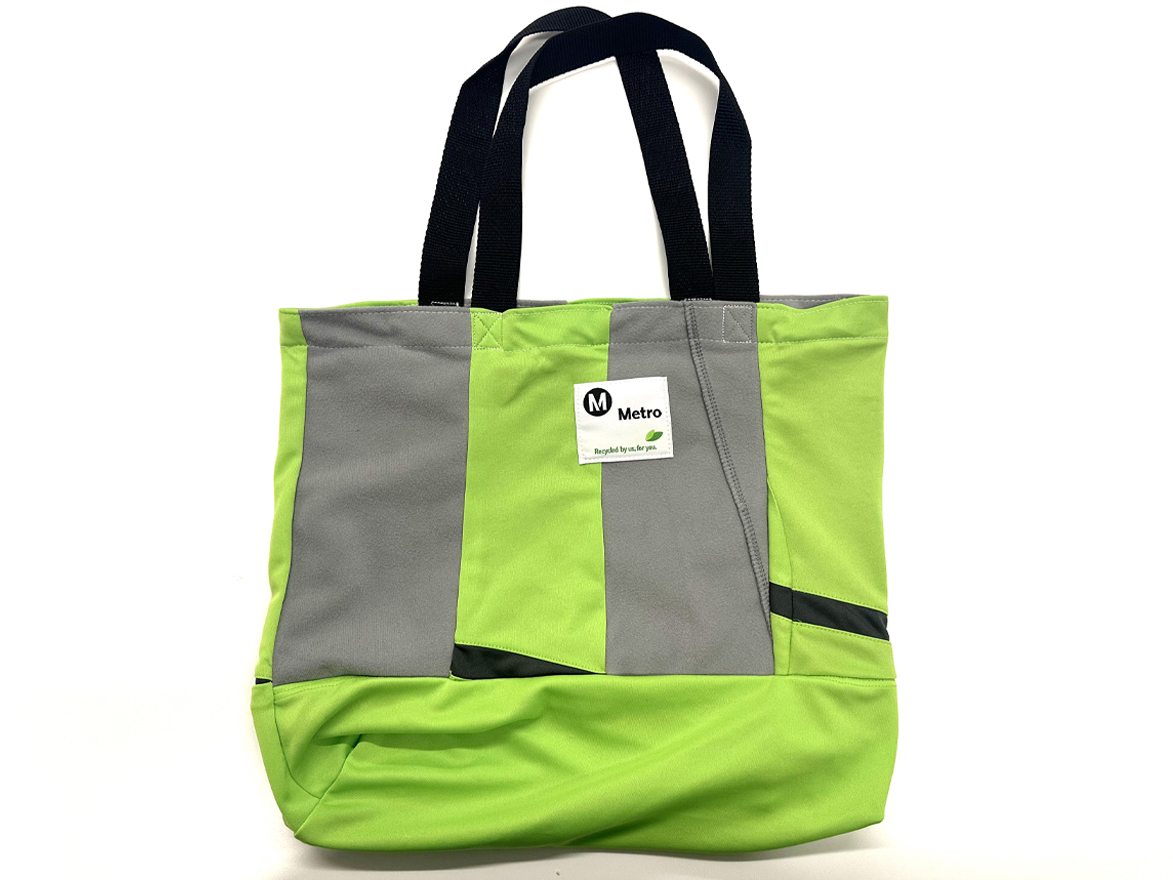 Creating tote bags from old uniforms prevents hundreds of pounds of waste from going to landfill.
Metro established our Uniform Upcycling program in 2024 to give old Metro uniforms a new life. In 2024, Metro Ambassadors received newly redesigned uniforms, phasing out hundreds of old jackets and shirts. Metro's Sustainability staff partnered with the Ambassadors team and CR&A, the local printing vendor with whom Metro previously collaborated to convert outdated vinyl construction banners into bags, to upcycle the old Metro Ambassador uniforms and transform them into tote bags. Through this process, Metro prevented nearly 1,600 jackets and shirts from going to landfill and created more than 2,337 custom tote bags. These upcycling efforts resulted in 742 pounds of waste being diverted from landfills.
Building on this success, Metro expanded the Uniform Upcycling program to our transportation operations staff. These staff receive new uniforms each year, which presents an opportunity to upcycle old uniforms. In 2024, the Environmental Management System (EMS) program team led a successful uniform donation drive for transportation operations staff and collected used pants, shirts, jackets and other pieces of gently-used clothing. Metro's Marketing team is currently collaborating with the Office of Sustainability to develop new ways to upcycle used uniforms into items that can not only give them a second life but also support Metro's waste diversion efforts.
2030 Targets
Understanding this Target
This target measures Metro's diversion of daily operational waste from landfill on an annual basis. The diversion rate compares the total amount of operational solid waste generated (including prevented waste) each year with the amount of waste that was diverted from landfill through prevention, reuse, recycling and organic waste recycling. As a result, strides made toward reducing our disposal rate in Target 1 will also benefit our diversion rate.
Disposed waste includes all materials that are sent to landfill and are not repurposed. Recycled waste includes all materials and commodity items that are captured and diverted from landfills to be converted into new materials. Organic recycled waste includes plant and animal derived material that are composted or converted to biomass for other uses (e.g., mulch). Prevented waste includes materials that are reused, as well as materials that are otherwise not acquired and disposed due to actions taken during procurement and within operations.
Target Performance
As of 2024, Metro is diverting just shy of 40% of its operational waste from landfill. However, this figure not only falls short of Metro's 50% diversion target, but it is also a marked decrease from the previous year (44.6% diversion). This is likely due to the fact that Metro's disposed waste figures increased by nearly 21.4% in 2024 from the previous year with new projects coming online, and that Metro could not yet divert recyclable or reusable materials at a commensurate rate. As with Target 1, Metro remains behind schedule to achieve its 50% landfill diversion rate for operational waste on an annual basis. Going forward, Metro will take steps to activate programs that expedite our progress toward reducing generated solid waste and improving waste diversion across the agency.
Understanding this Target
This target measures the aggregated landfill diversion rate of construction and demolition (C&D) debris generated by Metro's capital construction projects in a year. The diversion rate compares the total amount of C&D waste generated across all projects for which data is available with the amount of C&D waste that was diverted from landfill through prevention, reuse, recycling and organic waste recycling.
C&D waste is defined to include nonhazardous waste materials, such as concrete, metal and wood waste - hazardous waste, excavated soil and land clearing debris are excluded. C&D waste materials generally have the greatest potential to be diverted from landfills. The California Green Building Standards Code (CALGreen) currently requires a minimum 65% diversion rate for construction and demolition materials, yet we are committed to diverting at least 85% of our construction waste on an annual basis.
Target Performance
As of 2024, Metro is diverting nearly 88% of its C&D waste from landfills. This is a notable rebound from previously reported figures in 2022 (67.7%), though Metro actually achieved a higher diversion rate in 2023 (96.7%). Regardless, ongoing efforts to recycle soil and other materials at construction sites are proving effective. Despite the fact that this metric is subject to some fluctuations based on the construction phases of certain projects, Metro remains committed to diverting as much C&D waste as possible and has stayed above its target diversion rate of 85% for five of the past six years. Presently, Metro remains on track to achieve this target on an annual basis.