

Dashboard   >   Resilience and Climate Adaptation
Yellow leaf icon Metro Sustainability

Resilience and Climate Adaptation

Overview

Metro serves as a lifeline to our region, communities and economy. It is crucial that our system is resilient, as Metro's service continuity has the potential to affect several million people. As the climate changes, it will be critical to not only maintain reliable and consistent service, but to also increase passenger comfort and safety.

Projections for climate change, regional population, land use, technology and other factors play a role in how the Metro system is designed, used and operated. Since 2012, Metro has utilized these projections and assessed the resiliency of our systems against anticipated and unpredictable impacts to reduce the potential for service disruptions, and to clearly identify opportunities to strengthen system resilience. In 2019 and 2020, we continued this endeavor by working cross-departmentally to develop an All-Hazards Mitigation Plan, pursuing flexible adaptation pathways and expanding our leadership in advancing regional resilience.

Program Highlights

Integrating Climate Resilience into our Green Workforce Programs

Metro growing a greener workforce Through its Growing a Greener Workforce Program, Metro is introducing new courses to address climate action and resilience.

The Growing a Greener Workforce (GGW) program, designed and managed by Metro's Office of Sustainability, provides climate and sustainability classes for Metro staff, partners and Los Angeles community members who are interested in learning more about sustainability and climate change. GGW classes are offered to attendees at no cost, with goals to increase climate change awareness across Los Angeles County and foster relationships between Metro and the communities we serve.

The GGW program offers a wide range courses and training topics, including “Sustainability 101,” “The Role of Transit in Regional Decarbonization,” “GPRO Fundamentals of Building Green” and Envision Sustainability Professional (ENV SP) Certification. More recently, Metro has been focused on integrating climate adaptation and resilience topics into the program. These include new courses such as “Climate Resilience and Metro's Climate Action and Adaptation Plan,” “Extreme Heat for Contractors and Landscapers” and “The Benefits of Native Plants in Los Angeles.” For more information about these courses and other workforce development offerings, visit www.metro.net/ggw.

GGW provides class participants the opportunity to receive training certifications that can be applied to professional and personal growth opportunities. By providing these educational opportunities with an increased focus on climate resilience, we not only invest in our relationship with the Los Angeles community but also support Angelenos' ability to access transportation and prepare for the effects of future climate impacts.
2030 Targets

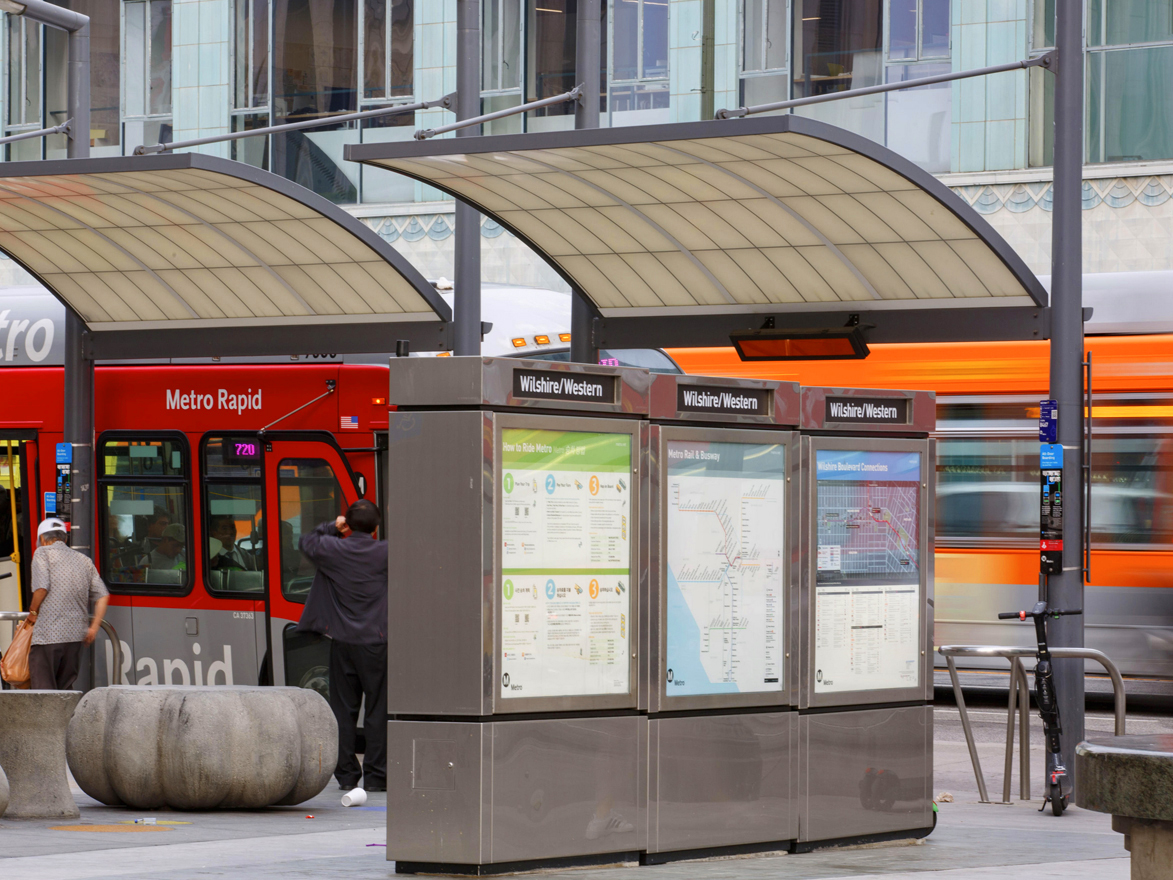
a photo describing Implement the flexible adaptation pathways concept to incorporate climate adaptation into planning, procurement, asset management and operations by 2025.
Understanding this Target

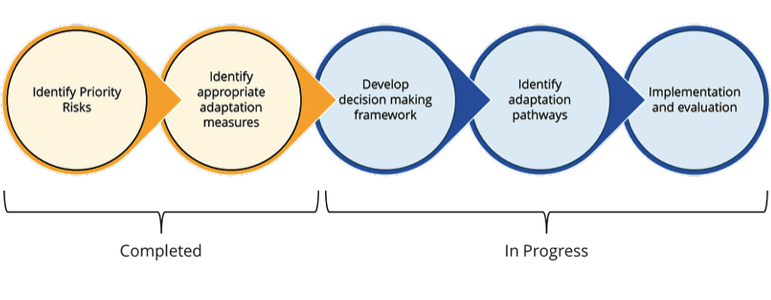
Flexible Adaptation Pathways is a framework that provides multiple adaptation options to be selected at various critical junctures to best meet on the ground conditions and accommodate uncertain futures. Metro's Flexible Adaptation Pathways approach creates a structure for thoughtful, incremental integration of adaptation strategies by identifying alternatives and establishing triggers for action. This target measures the implementation of this process, which will be evaluated using a series of key milestones. These milestones include:

  1. Identification of priority risks
  2. Identification of appropriate adaptation measures to address priority risks
  3. Development of decision-making framework
  4. Identification of adaptation pathways
  5. Implementation and evaluation of flexible adaptation pathways
The final milestone of this target, implementation and evaluation, will be supported by a monitoring program that evolves over time as data and information become available. Integrating this approach into Metro's state-of-the-art asset management, project planning processes and maintenance practices will minimize risk to business continuity.

Target Performance

Metro has completed the first two steps of this target. In 2023, Metro initiated a study to analyze the climate risks facing the system's assets, operations, staff and customers. This study also identified potential adaptation measures to address the most pressing risks for each affected area. The 2022 All-Hazards Mitigation Plan also helped to identify additional key risks. Moving forward, we will develop a decision-making framework to help select and prioritize adaptation options to be used in the short, medium, and long term, are cost- effective, and provide the greatest benefit to Metro riders, staff, and infrastructure. This framework will be the foundation of identifying appropriate adaptation pathways across multiple scenarios and timeframes. The final phase of this target will incorporate identified climate adaptation strategies into strategic departments and functions through the flexible adaptation pathways model.

While a fully implemented flexible adaptation pathways framework is the final goal, Metro is already taking actions to mitigate climate risks in the near term. As extreme heat continues to negatively affect passenger comfort and safety, this is a priority climate adaptation issue to address. Metro is actively incorporating shade and urban heat island mitigation strategies into existing infrastructure and is coordinating across local jurisdictions to provide resources to aid communities most vulnerable to extreme heat.
a photo describing Prioritize improvements to locations, facilities, infrastructure, equipment and operations to reduce risk.
Understanding this Target

This target measures our work to develop, prioritize and implement improvements to critical infrastructure in Equity Focused Communities (EFCs) by investing in both physical and social resilience. Ongoing improvements to reduce risks include but are not limited to identifying the most pressing climate risks facing the system, identifying relevant adaptation measures, maintaining an aggressive State of Good Repair program, increasing redundancy of communication systems, installing backup power, coordinating regional multi-agency resilience programs and preparing to provide resources to meet employee and customer needs post-disaster.

Target Performance

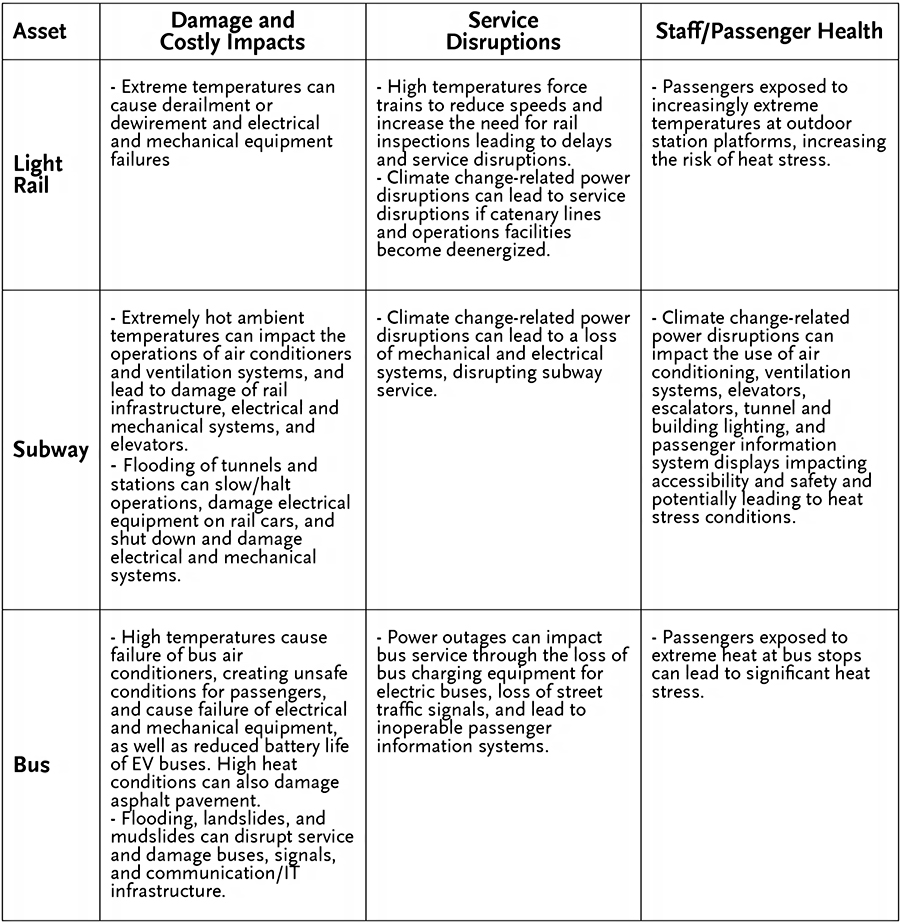
The first critical step to prioritizing improvements to reduce risk is understanding the most at-risk assets, operations, staff, and customers. As part of Metro's 2023 study to understand climate risk, we identified the most pressing climate risks in the system and their potential to impact light rail, bus, and subway line infrastructure, service, operations, and passenger safety and health. Risks were tiered into two categories (significant and emerging) to allow for immediate and long-term prioritization. The results of this study are directly informing investments into climate adaptation and advancing system resilience.

Alongside these efforts, Metro's Station Evaluation Program has been a valuable tool for maintaining Metro's stations in a state of good repair and for identifying and prioritizing resiliency improvements. The program inspects all rail and bus stations and bus transit centers on a quarterly basis to ensure they are clean, safe and functional for all patrons. Evaluations consist of 38 station aspects ranging from elevators and lighting, to TAP fare collection equipment and customer signage with scoring across two subcategories of appearance and functionality. This process provides actionable data points for maintenance staff to complete repairs and helps identify recurring issues reported by patrons, allowing staff to seek remedial and preventative solutions.

In the last quarter of calendar year 2024 Metro's proactive response to addressing station evaluation issues resulted in a 37% increase in scores for appearance criteria and a 54% increase in scores for functionality criteria. Recognizing the importance of providing functional, safe and clean transit stations, Metro intends to strengthen this program through continued collaboration with surrounding jurisdictions and agencies.

Overview

Metro serves as a lifeline to our region, communities and economy. It is crucial that our system is resilient, as Metro's service continuity has the potential to affect several million people. As the climate changes, it will be critical to not only maintain reliable and consistent service, but to also increase passenger comfort and safety.

Projections for climate change, regional population, land use, technology and other factors play a role in how the Metro system is designed, used and operated. Since 2012, Metro has utilized these projections and assessed the resiliency of our systems against anticipated and unpredictable impacts to reduce the potential for service disruptions, and to clearly identify opportunities to strengthen system resilience. In 2019 and 2020, we continued this endeavor by working cross-departmentally to develop an All-Hazards Mitigation Plan, pursuing flexible adaptation pathways and expanding our leadership in advancing regional resilience.

Program Highlights

Integrating Climate Resilience into our Green Workforce Programs
Metro growing a greener workforce Through its Growing a Greener Workforce Program, Metro is introducing new courses to address climate action and resilience.

The Growing a Greener Workforce (GGW) program, designed and managed by Metro's Office of Sustainability, provides climate and sustainability classes for Metro staff, partners and Los Angeles community members who are interested in learning more about sustainability and climate change. GGW classes are offered to attendees at no cost, with goals to increase climate change awareness across Los Angeles County and foster relationships between Metro and the communities we serve.

The GGW program offers a wide range courses and training topics, including “Sustainability 101,” “The Role of Transit in Regional Decarbonization,” “GPRO Fundamentals of Building Green” and Envision Sustainability Professional (ENV SP) Certification. More recently, Metro has been focused on integrating climate adaptation and resilience topics into the program. These include new courses such as “Climate Resilience and Metro's Climate Action and Adaptation Plan,” “Extreme Heat for Contractors and Landscapers” and “The Benefits of Native Plants in Los Angeles.” For more information about these courses and other workforce development offerings, visit www.metro.net/ggw.

GGW provides class participants the opportunity to receive training certifications that can be applied to professional and personal growth opportunities. By providing these educational opportunities with an increased focus on climate resilience, we not only invest in our relationship with the Los Angeles community but also support Angelenos' ability to access transportation and prepare for the effects of future climate impacts.

2030 Targets

a photo describing Implement the flexible adaptation pathways concept to incorporate climate adaptation into planning, procurement, asset management and operations by 2025.
Understanding this Target

Flexible Adaptation Pathways is a framework that provides multiple adaptation options to be selected at various critical junctures to best meet on the ground conditions and accommodate uncertain futures. Metro's Flexible Adaptation Pathways approach creates a structure for thoughtful, incremental integration of adaptation strategies by identifying alternatives and establishing triggers for action. This target measures the implementation of this process, which will be evaluated using a series of key milestones. These milestones include:

  1. Identification of priority risks
  2. Identification of appropriate adaptation measures to address priority risks
  3. Development of decision-making framework
  4. Identification of adaptation pathways
  5. Implementation and evaluation of flexible adaptation pathways
The final milestone of this target, implementation and evaluation, will be supported by a monitoring program that evolves over time as data and information become available. Integrating this approach into Metro's state-of-the-art asset management, project planning processes and maintenance practices will minimize risk to business continuity.

Target Performance

Metro has completed the first two steps of this target. In 2023, Metro initiated a study to analyze the climate risks facing the system's assets, operations, staff and customers. This study also identified potential adaptation measures to address the most pressing risks for each affected area. The 2022 All-Hazards Mitigation Plan also helped to identify additional key risks. Moving forward, we will develop a decision-making framework to help select and prioritize adaptation options to be used in the short, medium, and long term, are cost- effective, and provide the greatest benefit to Metro riders, staff, and infrastructure. This framework will be the foundation of identifying appropriate adaptation pathways across multiple scenarios and timeframes. The final phase of this target will incorporate identified climate adaptation strategies into strategic departments and functions through the flexible adaptation pathways model.

While a fully implemented flexible adaptation pathways framework is the final goal, Metro is already taking actions to mitigate climate risks in the near term. As extreme heat continues to negatively affect passenger comfort and safety, this is a priority climate adaptation issue to address. Metro is actively incorporating shade and urban heat island mitigation strategies into existing infrastructure and is coordinating across local jurisdictions to provide resources to aid communities most vulnerable to extreme heat.

a photo describing Prioritize improvements to locations, facilities, infrastructure, equipment and operations to reduce risk.
Understanding this Target

This target measures our work to develop, prioritize and implement improvements to critical infrastructure in Equity Focused Communities (EFCs) by investing in both physical and social resilience. Ongoing improvements to reduce risks include but are not limited to identifying the most pressing climate risks facing the system, identifying relevant adaptation measures, maintaining an aggressive State of Good Repair program, increasing redundancy of communication systems, installing backup power, coordinating regional multi-agency resilience programs and preparing to provide resources to meet employee and customer needs post-disaster.

Target Performance

The first critical step to prioritizing improvements to reduce risk is understanding the most at-risk assets, operations, staff, and customers. As part of Metro's 2023 study to understand climate risk, we identified the most pressing climate risks in the system and their potential to impact light rail, bus, and subway line infrastructure, service, operations, and passenger safety and health. Risks were tiered into two categories (significant and emerging) to allow for immediate and long-term prioritization. The results of this study are directly informing investments into climate adaptation and advancing system resilience.

Alongside these efforts, Metro's Station Evaluation Program has been a valuable tool for maintaining Metro's stations in a state of good repair and for identifying and prioritizing resiliency improvements. The program inspects all rail and bus stations and bus transit centers on a quarterly basis to ensure they are clean, safe and functional for all patrons. Evaluations consist of 38 station aspects ranging from elevators and lighting, to TAP fare collection equipment and customer signage with scoring across two subcategories of appearance and functionality. This process provides actionable data points for maintenance staff to complete repairs and helps identify recurring issues reported by patrons, allowing staff to seek remedial and preventative solutions.

In the last quarter of calendar year 2024 Metro's proactive response to addressing station evaluation issues resulted in a 37% increase in scores for appearance criteria and a 54% increase in scores for functionality criteria. Recognizing the importance of providing functional, safe and clean transit stations, Metro intends to strengthen this program through continued collaboration with surrounding jurisdictions and agencies.