

Dashboard   >   Materials, Construction and Operations
Yellow leaf icon Metro Sustainability

Materials, Construction and Operations

Overview

With the passage of Measure R in 2008 and Measure M in 2016, Metro has had access to the resources and funding needed to accelerate the expansion of our world-class transportation system. This includes construction and maintenance of rail lines, rapid bus lines, bike paths and more. A lifecycle approach to these initiatives will advance regional mobility, while integrating sustainability into planning, design, construction, operations and maintenance.

In 2011, we established a Green Construction Policy (GCP) to reduce emissions during construction, as well as the Sustainability Plan (SP) Program to assist contractors with meeting the California Green Building Standards Code (CALGreen) obligations. We have built on these successes by creating an interdepartmental Sustainability Engagement Team that is responsible for embedding sustainability in every phase of our projects. The development of our Sustainable Acquisition Program in 2019 strengthened our efforts to sustainably source products and services. We continue to proactively identify opportunities to advance sustainability within material selections, construction activities and operational processes.

Program Highlights

Using Innovative Technologies on Capital Projects through our Green Construction Policy
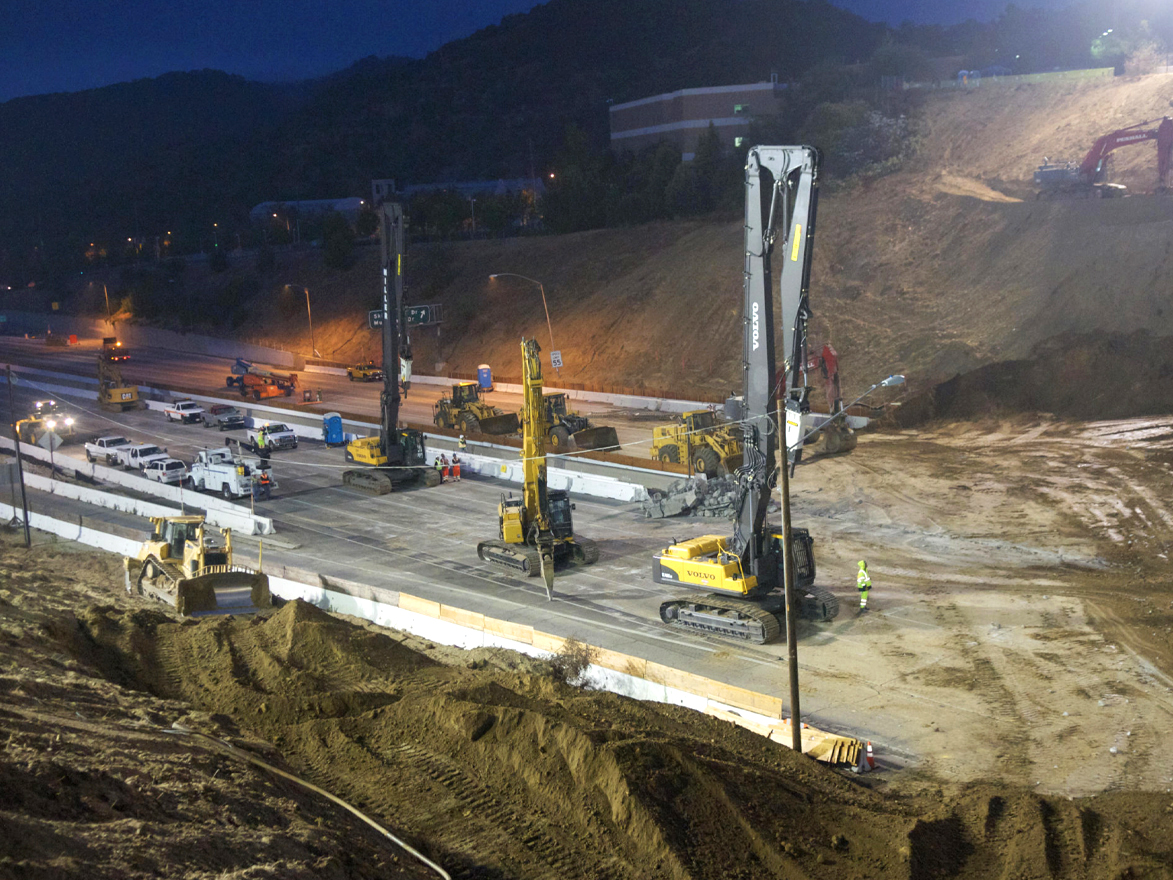
Metro Electric Construction Equipment Metro's GCP reduced the Regional Connector Transit Corridor Project's GHG emissions by 45% compared to the base-case, eliminating 2,610 tons of carbon dioxide equivalent (CO2e).

Metro has been making significant efforts to minimize construction impacts associated with its capital projects. Metro first introduced its Green Construction Policy (GCP) in 2011. The GCP represents a cutting-edge approach to construction-phase air pollution control that provides guidelines for integrating low-pollutant equipment in construction projects. Metro's GCP has served as a model framework for peer agencies and regulatory agencies.

While the California Air Resources Board (CARB) instituted a requirement for using renewable diesel (RD99) for all off-road construction equipment in 2024, Metro has had this requirement in place through the GCP since 2018. Renewable diesel burns more cleanly and significantly reduces air pollution and greenhouse gases compared to petroleum-based diesel. Metro's Regional Connector Transit Project, completed in 2023, established 1.9 miles of new track and three new underground stations. The project's use of renewable diesel eliminated an estimated 2,647 tons of air pollutants—a 45% reduction in greenhouse gas emissions. These reductions included a 63% reduction in nitrogen oxide (NOx) emissions, a 79% reduction in particulate matter (PM) emissions and a 66% reduction in Reactive Organic Gas (ROG) emissions.

Furthermore, Metro's GCP and other construction specifications require hybrid, electric and battery-powered construction equipment and generators wherever possible. Metro estimates that up to 44% of its construction equipment in 2024 was electric or battery operated. As more large-scale hybrid and electric construction equipment become commercially available, such as light towers, scissor lifts, boom lifts and larger tower lifts, Metro will continue to expand their use for additional projects. Through the GCP, Metro remains committed to using innovative technologies that decrease the impacts of construction on our neighborhoods and communities.
2030 Targets

Understanding this Target

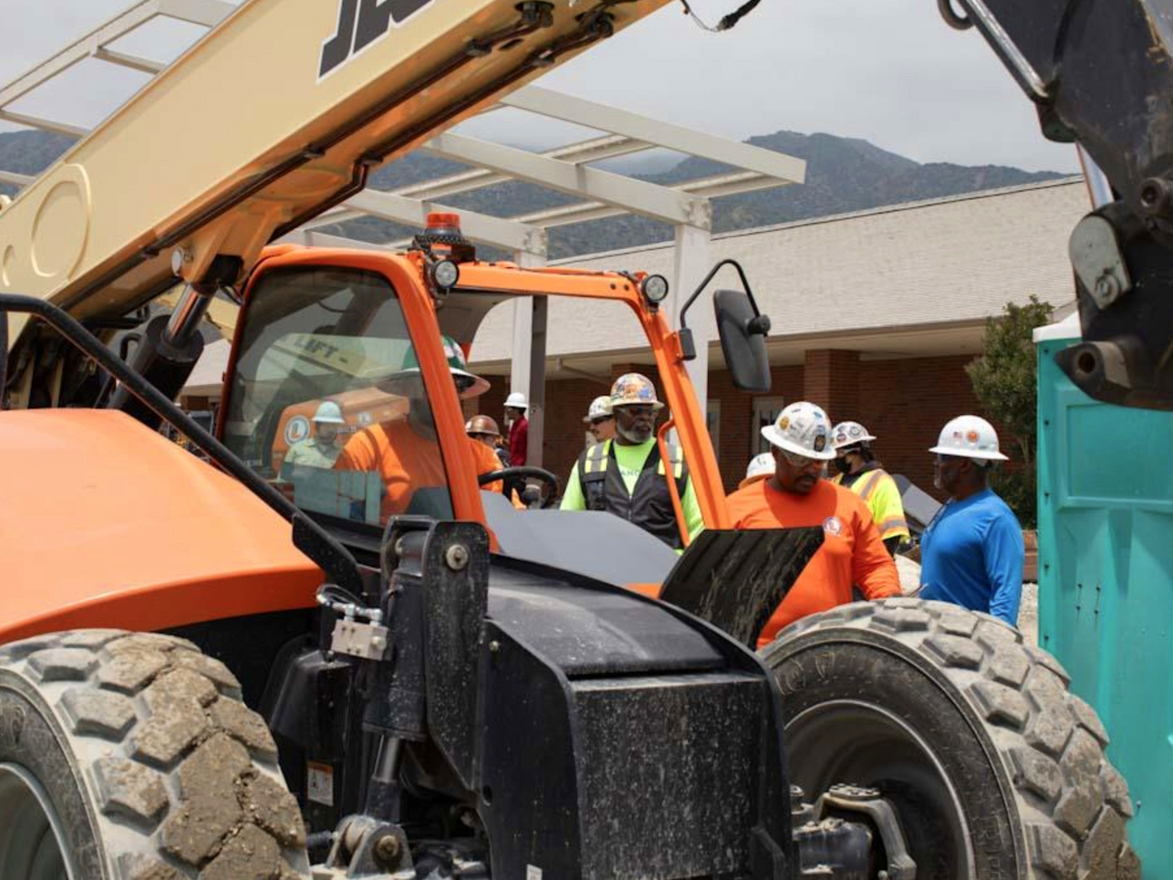
This target measures Metro's efforts to design and build 100% of our capital projects to the California Green Building Standards Code (CALGreen) requirements and to achieve enhanced green building performance measures contained in CALGreen Tier 2. This second tier contains voluntary measures in addition to the regulation's minimum requirements. Target performance is measured by the percentage of new projects completed within the performance period that are designed and built to Tier 2 standards.

To achieve this target, Metro is requiring contractors to comply with the mandatory and voluntary measures outlined in CALGreen Tier 2 when designing and building capital projects, ensuring that we design and construct projects that both demonstrate excellence in sustainable design and advance regional mobility and resilience. Our Sustainability Engagement Team is supporting the achievement of this target, intervening early in the planning and design phases to integrate the relevant sustainable design elements. In addition, staff supports contractor compliance throughout each phase of a project, utilizing robust internal communication and partnerships during the earliest phases of the capital project lifecycle to meet Tier 2 requirements.

Target Performance

From 2023-2024, several capital projects have progressed through the construction and closeout phases, with six projects confirmed to meet CALGreen Tier 2 requirements across facilities such as stations and maintenance and storage facilities (MSFs). Projects like the East San Fernando Valley Transit Corridor and the G Line Improvements demonstrate meaningful compliance with Tier 2 standards, while others like the Metro Center Project are nearing full alignment pending final verification.

More than a dozen projects remain active within the Sustainability Engagement Team process. These include projects in early planning, preliminary design and construction phases, where teams continue to integrate CALGreen mandatory and electric measures as well as additional sustainability strategies. The Sustainability Engagement Team supports project delivery through sustainability management plans initiated during planning and environmental review, working with contractors to define and formalize Tier 2-aligned strategies.

Metro has also advanced key policy updates, including revisions to the Metro Rail Design Criteria (MRDC), which now mandate CALGreen Tier 2 compliance for all applicable facilities exceeding 10,000 square feet. These measures strengthen Metro's commitment to environmentally responsible design and construction.
a photo describing Complete Sustainable Acquisition Program training/ implementation and develop 2030 program targets for annual sustainable acquisition spend by 2022.
Understanding this Target

Sustainable acquisition is a holistic procurement strategy that considers the environmental, ethical and social impacts of an organization's supply chain in addition to the traditional selection criteria of price, quality and functionality. Metro's annual budget generally exceeds $6 billion, and our operations rely on the procurement of millions of dollars' worth of goods and services. Therefore, the agency has significant opportunities to reduce the environmental and social impacts within our acquisition and supply chain activities. The Sustainable Acquisition Program will advance fiscal responsibility, protect Metro from supply chain risks, reduce toxic materials, improve air quality and support economic development. It will also change our purchasing and behavioral practices to minimize waste by reducing the upstream and downstream impacts of our procured material. This target measures Metro's progress implementing the program, beginning with the development of staff training and implementation support materials. Quantitative performance targets measuring the results of the program (i.e., annual spend on sustainable goods/services) are actively being developed.

Target Performance

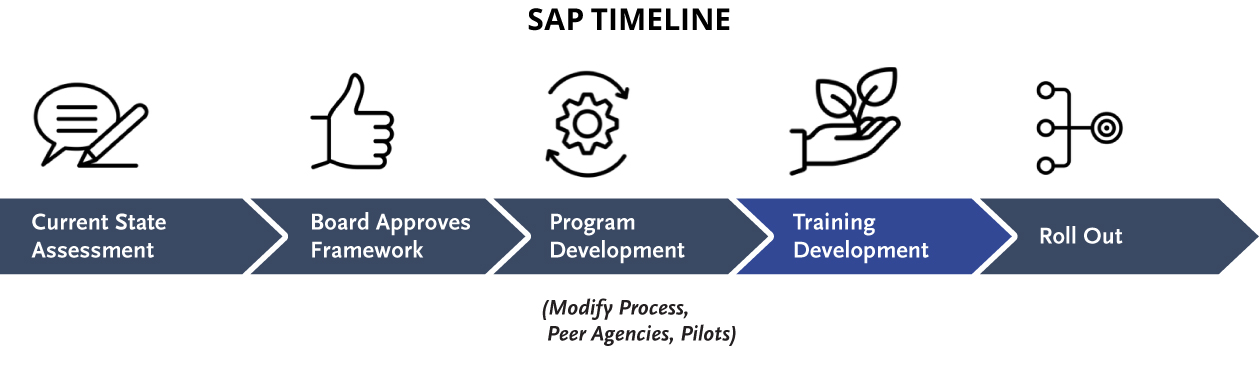
In June 2019, Metro's Board of Directors adopted the Sustainable Acquisition Program Framework and authorized the development of modified acquisition procedures. From 2019-2020, staff worked across departments to identify best practices from peer agencies, develop draft tools and test the efficacy of sustainable acquisition in practice. Implementation of the program was originally slated to begin in 2021. However, the COVID-19 pandemic created unprecedented challenges for Metro, including both significant revenue shortfalls and high demand for acquisition of pandemic-related supplies. Due to this combined challenge facing Metro, implementation of the Sustainable Acquisition Program was temporarily postponed.

In 2024, Metro resumed preparations to launch the program by incorporating new sustainability features into the agency's procurement workflow and developing internal program training for staff. The program is currently projected to fully roll out in 2026. Once deployed, Metro will develop program goals and evaluate the effectiveness of the program tools and processes. Additionally, Metro will evaluate the environmental outcomes of previously awarded contracts containing sustainability considerations to identify lessons learned.

Overview

With the passage of Measure R in 2008 and Measure M in 2016, Metro has had access to the resources and funding needed to accelerate the expansion of our world-class transportation system. This includes construction and maintenance of rail lines, rapid bus lines, bike paths and more. A lifecycle approach to these initiatives will advance regional mobility, while integrating sustainability into planning, design, construction, operations and maintenance.

In 2011, we established a Green Construction Policy (GCP) to reduce emissions during construction, as well as the Sustainability Plan (SP) Program to assist contractors with meeting the California Green Building Standards Code (CALGreen) obligations. We have built on these successes by creating an interdepartmental Sustainability Engagement Team that is responsible for embedding sustainability in every phase of our projects. The development of our Sustainable Acquisition Program in 2019 strengthened our efforts to sustainably source products and services. We continue to proactively identify opportunities to advance sustainability within material selections, construction activities and operational processes.

Program Highlights

Using Innovative Technologies on Capital Projects through our Green Construction Policy
Metro Electric Construction Equipment Metro's GCP reduced the Regional Connector Transit Corridor Project's GHG emissions by 45% compared to the base-case, eliminating 2,610 tons of carbon dioxide equivalent (CO2e).

Metro has been making significant efforts to minimize construction impacts associated with its capital projects. Metro first introduced its Green Construction Policy (GCP) in 2011. The GCP represents a cutting-edge approach to construction-phase air pollution control that provides guidelines for integrating low-pollutant equipment in construction projects. Metro's GCP has served as a model framework for peer agencies and regulatory agencies.

While the California Air Resources Board (CARB) instituted a requirement for using renewable diesel (RD99) for all off-road construction equipment in 2024, Metro has had this requirement in place through the GCP since 2018. Renewable diesel burns more cleanly and significantly reduces air pollution and greenhouse gases compared to petroleum-based diesel. Metro's Regional Connector Transit Project, completed in 2023, established 1.9 miles of new track and three new underground stations. The project's use of renewable diesel eliminated an estimated 2,647 tons of air pollutants—a 45% reduction in greenhouse gas emissions. These reductions included a 63% reduction in nitrogen oxide (NOx) emissions, a 79% reduction in particulate matter (PM) emissions and a 66% reduction in Reactive Organic Gas (ROG) emissions.

Furthermore, Metro's GCP and other construction specifications require hybrid, electric and battery-powered construction equipment and generators wherever possible. Metro estimates that up to 44% of its construction equipment in 2024 was electric or battery operated. As more large-scale hybrid and electric construction equipment become commercially available, such as light towers, scissor lifts, boom lifts and larger tower lifts, Metro will continue to expand their use for additional projects. Through the GCP, Metro remains committed to using innovative technologies that decrease the impacts of construction on our neighborhoods and communities.

2030 Targets

Understanding this Target

This target measures Metro's efforts to design and build 100% of our capital projects to the California Green Building Standards Code (CALGreen) requirements and to achieve enhanced green building performance measures contained in CALGreen Tier 2. This second tier contains voluntary measures in addition to the regulation's minimum requirements. Target performance is measured by the percentage of new projects completed within the performance period that are designed and built to Tier 2 standards.

To achieve this target, Metro is requiring contractors to comply with the mandatory and voluntary measures outlined in CALGreen Tier 2 when designing and building capital projects, ensuring that we design and construct projects that both demonstrate excellence in sustainable design and advance regional mobility and resilience. Our Sustainability Engagement Team is supporting the achievement of this target, intervening early in the planning and design phases to integrate the relevant sustainable design elements. In addition, staff supports contractor compliance throughout each phase of a project, utilizing robust internal communication and partnerships during the earliest phases of the capital project lifecycle to meet Tier 2 requirements.

Target Performance

From 2023-2024, several capital projects have progressed through the construction and closeout phases, with six projects confirmed to meet CALGreen Tier 2 requirements across facilities such as stations and maintenance and storage facilities (MSFs). Projects like the East San Fernando Valley Transit Corridor and the G Line Improvements demonstrate meaningful compliance with Tier 2 standards, while others like the Metro Center Project are nearing full alignment pending final verification.

More than a dozen projects remain active within the Sustainability Engagement Team process. These include projects in early planning, preliminary design and construction phases, where teams continue to integrate CALGreen mandatory and electric measures as well as additional sustainability strategies. The Sustainability Engagement Team supports project delivery through sustainability management plans initiated during planning and environmental review, working with contractors to define and formalize Tier 2-aligned strategies.

Metro has also advanced key policy updates, including revisions to the Metro Rail Design Criteria (MRDC), which now mandate CALGreen Tier 2 compliance for all applicable facilities exceeding 10,000 square feet. These measures strengthen Metro's commitment to environmentally responsible design and construction.

a photo describing Complete Sustainable Acquisition Program training/ implementation and develop 2030 program targets for annual sustainable acquisition spend by 2022.
Understanding this Target

Sustainable acquisition is a holistic procurement strategy that considers the environmental, ethical and social impacts of an organization's supply chain in addition to the traditional selection criteria of price, quality and functionality. Metro's annual budget generally exceeds $6 billion, and our operations rely on the procurement of millions of dollars' worth of goods and services. Therefore, the agency has significant opportunities to reduce the environmental and social impacts within our acquisition and supply chain activities. The Sustainable Acquisition Program will advance fiscal responsibility, protect Metro from supply chain risks, reduce toxic materials, improve air quality and support economic development. It will also change our purchasing and behavioral practices to minimize waste by reducing the upstream and downstream impacts of our procured material. This target measures Metro's progress implementing the program, beginning with the development of staff training and implementation support materials. Quantitative performance targets measuring the results of the program (i.e., annual spend on sustainable goods/services) are actively being developed.

Target Performance

In June 2019, Metro's Board of Directors adopted the Sustainable Acquisition Program Framework and authorized the development of modified acquisition procedures. From 2019-2020, staff worked across departments to identify best practices from peer agencies, develop draft tools and test the efficacy of sustainable acquisition in practice. Implementation of the program was originally slated to begin in 2021. However, the COVID-19 pandemic created unprecedented challenges for Metro, including both significant revenue shortfalls and high demand for acquisition of pandemic-related supplies. Due to this combined challenge facing Metro, implementation of the Sustainable Acquisition Program was temporarily postponed.

In 2024, Metro resumed preparations to launch the program by incorporating new sustainability features into the agency's procurement workflow and developing internal program training for staff. The program is currently projected to fully roll out in 2026. Once deployed, Metro will develop program goals and evaluate the effectiveness of the program tools and processes. Additionally, Metro will evaluate the environmental outcomes of previously awarded contracts containing sustainability considerations to identify lessons learned.