


Overview
Metro is investing in the future of the Los Angeles region, starting with our greatest asset - people. We have been proactively preparing for a large subset of our workforce being eligible for retirement between 2020 and 2030 by expanding our highly skilled and diverse workforce to meet the expected demand for staff. We are creating clear pathways for existing employees to advance their careers while also expanding recruitment efforts and creating proactive pipelines and equitable access to opportunity for the next generation of employees.
Program Highlights
Training the Sustainability Leaders of Tomorrow
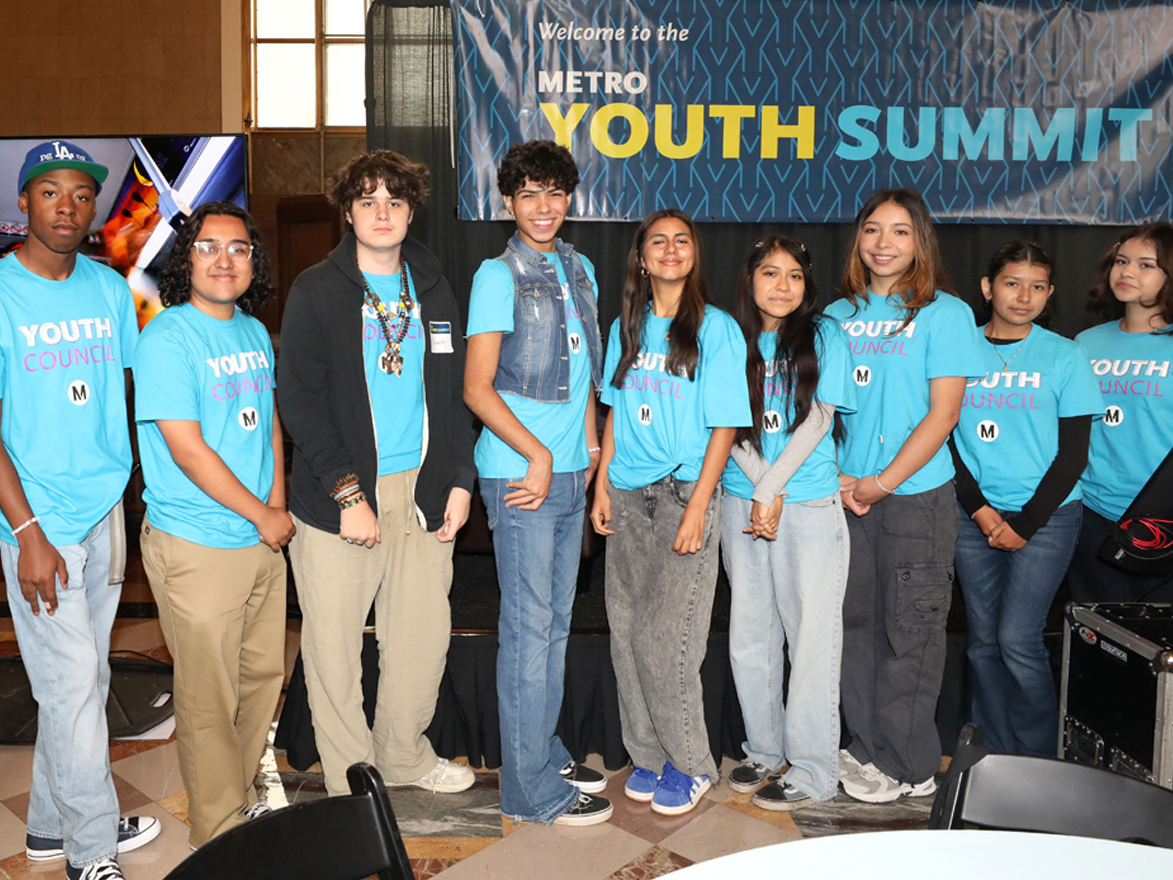 Metro's Sustainable Youth Program is helping young people across LA County prepare for careers that lead to more sustainable, healthier futures for them and their communities.
Metro is working with partners across the region to engage youth on sustainability issues and prepare them for green careers. Metro's Sustainability Youth Program (SYP) launched in 2023 to provide a platform for young people to get involved in Metro's sustainability efforts. The program serves youth ages 13-25, differentiated by High School, Young Adult and Young Professional audiences. The goals of the program are to allow youth interested in sustainability to develop leadership and professional development skills, connect youth with mentorship from working professionals, foster sustainability awareness among youth and provide opportunities for alignment between Metro's Office of Sustainability and other Metro departments and programs.
Metro's SYP engaged youth through several special events in 2024, including interactive activities and speaker engagements at the Metro Youth Summit, California State Senator Lena A. Gonzalez's Youth Environmental Champion's program and Earth Clubs and STEM nights at Los Angeles schools. In 2025, Metro will launch the SYP Speaker Series, which will connect sustainability and environmental professionals with classrooms, youth groups, community-based programs and clubs to educate and inspire youth by sharing insights on a variety of sustainability topics. Speakers will serve as guest presenters to share knowledge and insights with enthusiastic young learners and play a pivotal role in building a more sustainable future for our community.
An SYP webpage launched in 2025 to serve as a hub for youth interested in the nexus of sustainability and transportation (www.metro.net/sustainableyouth). The SYP webpage features sustainability resources and opportunities for youth to become more involved with Metro's sustainability program. Through this online resource and ongoing events, we are helping young people across Los Angeles County prepare for careers that lead to more sustainable, healthier futures for them and their communities.

2030 Targets
Understanding this Target
Metro must attract, develop and retain expertise to further the agency's innovative work and to build, run and maintain our growing transportation system. This target measures Metro's success pursuing multifaceted recruitment efforts to engage and recruit candidates from groups and communities that Metro has traditionally struggled to reach. A significant element of this work is to invest in preparing local residents, often from underrepresented populations, for positions with Metro and across the transportation industry. On an annual basis, we will quantify the number of new employees recruited from the targeted demographics.
Target Performance
As of 2024, Metro has made strong advancements in its efforts to recruit and engage employees from underrepresented communities. Between 2023 and 2024, for example, Metro successfully solicited applications from 1,400 veterans which resulted in 312 interviews and 115 hires. These outcomes are only made possible through Metro's ongoing efforts to engage and support its former service-members. Metro's Veteran Program represents a collaborative effort between several Metro departments, local and nation-wide public agencies, community-based and veteran-service organizations, military units, professional associations and America Job Centers of California (AJCC) to provide employment opportunities and resources to veterans in Greater Los Angeles. Former service-members now employed at Metro can also participate in Metro's Veteran Employee Resource Group, which facilitates conversations, pride and camaraderie among Metro staff who were formerly members of the military.
Metro has also expanded its efforts to reach prospective employees from underrepresented communities through Room-To-Work, our program that offers career pathways in transportation to unhoused individuals. In addition to employment at Metro, Room-To-Work offers training, interview coaching and other wraparound services to help participants transition into stable employment. Since its launch in 2022, Room-To-Work has successfully provided employment to almost 90 people, half of whom remain actively employed by Metro. Metro's Transportation Career Academy Program (TCAP) represents another example of our diverse recruitment efforts. TCAP provides summer internship opportunities to current high school juniors and seniors who reside in Los Angeles County, depend on transit and live or attend school near a Metro rail station or Metro rail expansion project. TCAP offers students opportunities to learn about transportation careers and participate in real-world projects at one of the nation's largest public transportation agencies. In FY24, 159 students successfully graduated from the TCAP program.
Understanding this Target
This target measures Metro's commitment to increasing access to opportunity for local businesses, Small Business Enterprise (SBE), women-owned businesses, Disadvantaged Business Enterprise (DBE) and Disabled Veteran Business Enterprise (DVBE). These businesses, with their ingenuity, innovation and expertise, form the cornerstone of our region's economic development. Metro's Diversity & Economic Opportunity Department focuses on supporting these businesses and connecting them with procurement opportunities.
Target Performance
In 2023 and 2024, Metro sustained its SBE, DBE and DVBE participation rates, with percentages at 14.98% and 12.18%, 10.94% and 8.28% and 1.9% and 1.15%, respectively. However, Metro's small business participation trends over the last several years have been bracketed by the COVID-19 pandemic and Metro's rapid post-execis transportation: our SBE, DBE and DVBE participation rates have all declined since their pre-pandemic percentages. These trends reveal more than economic strain—they underscore the need for bolder systems of support, access and reform to ensure procurement equity in the future. Supporting small businesses means supporting innovation, capacity-building and sustainability.
Amid these challenges, Metro continued to expand the resilience and strategic recovery of our economic justice programs. Our Small Business Prime Program, which enables small businesses to bid on and win contracts as prime contractors, has now awarded $290 million over the last 10 years to Metro- certified SBEs. Our Local Small Business Enterprise (LSBE) Preference Program, which boosts contracting opportunities for small businesses in LA County, has awarded $90.6 million in contracts since tracking first began in 2022. We have implemented our 15-Day Pay Policy for SBEs to ensure they are paid within 15 days of invoice approval. In these ways, Metro's small business programs are not just designed to help Metro meet and exceed our triennial DEOD contracting goals, but help us build procurement ecosystems that uplift underrepresented entrepreneurs, generate community wealth and expand the circle of opportunity for all Angelenos.